
“… fixing our eyes on Jesus, the author and perfecter of faith, who for the joy set before Him endured the cross, despising the shame, and has sat down at the right hand of the throne of God.” Hebrews 12:2 (NAS)
Happy New Year! This traditional greeting invites us to look ahead to the year to come with hope for good things. But if we are honest, what do we really see, and how do we feel, as we look out on the world at the start of 2026?
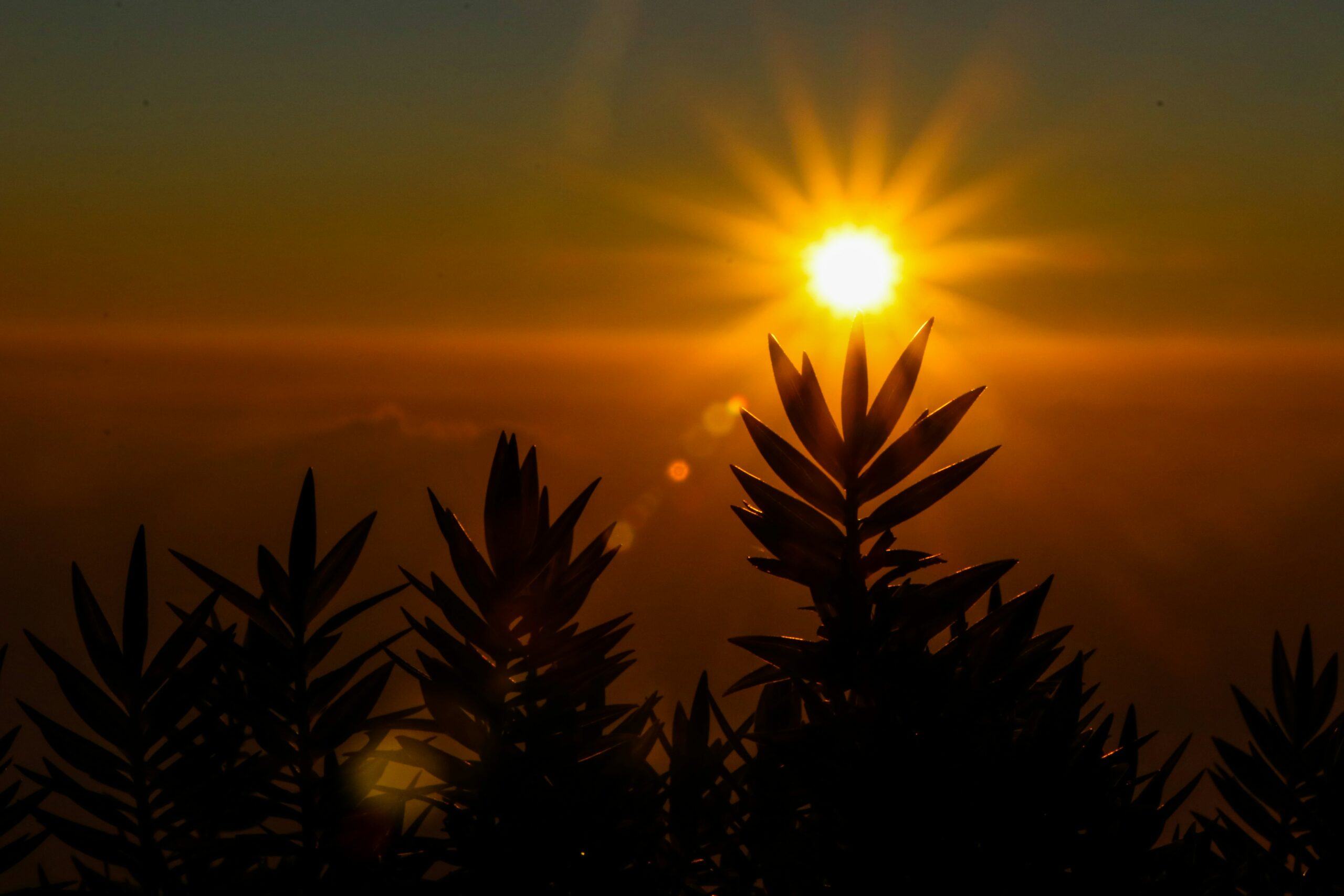
My church here in Sakata has been going through the book of Ecclesiastes in our weekly Bible study. In this book, the Preacher observes how life is lived ‘under the sun’ (that is, without reference to God), to see if he can make sense of it. Much of what he sees, however, is not good: injustice, oppression, the insatiability of the rich, the drudgery of work, and unfairness as the wicked live long and prosperous lives. Whatever path he explores – wisdom, pleasure, possessions – his repeated conclusion is that it is ‘hevel’.
Hevel is usually translated as “vanity,” but the word literally means “vapour,” or “mist.” It describes something real, but fleeting—something you can see yet cannot grasp or hold onto. Life under the sun, the Preacher tells us, often feels like that: frustrating, elusive, difficult to make sense of.
Ecclesiastes actually feels very up to date. In 2026, we can see many of the same realities the Preacher saw all those centuries ago. As we look at our world, we too see greed, injustice, oppression, and people not getting what they deserve. As the Preacher notes, “there is nothing new under the sun” (1:14). Ecclesiastes is not an optimistic book for the state of the world, but it is real.
However, there are glimpses of hope. While the Preacher describes the state of things ‘under the sun’, he also calls us to lift our eyes, reminding us that “God is in heaven and you are on earth” (5:2) and that ultimately, “God will bring every deed into judgment” (12:14). There is a greater reality above the sun. God is present, in control, and faithful, even when we cannot understand his ways.
As Christians, we know this reality, but too often we can be tempted to focus our eyes on things ‘under the sun’. In Japanese the character for eye is 目 and the character for look is 見 – an eye with legs! It’s a reminder that we can choose where we take our eyes, what we focus on.
When we were told that my husband David’s cancer was terminal, I felt the temptation to look at our circumstances ‘under the sun’. There it looked like the cancer was in control, rather than God. It was hard to see how God’s plan for us was one of love, and how he would work it together with all things for good. But God showed me that I had a choice. I could look at our circumstances, or I could look to God and to his word. And so, with his help, each day I chose to look to him, to trust that he was in control, that he was loving and good, as his word promised. There was much I didn’t understand, and still don’t, but he enabled me to lift my eyes and trust him with all that was happening.
This is the essence of faith. As the writer of the letter to the Hebrews explains, “faith is the assurance of things hoped for, the conviction of things not yet seen” (11:1). This does not mean that Christians are called to ignore or deny what they see ‘under the sun’. We are to see the brokenness of the world, to pray for it, and to live faithfully in it—seeking justice, loving our neighbours, and being salt and light where God has placed us.
But the things of this world are not to be our focus. We are to fix our eyes on Jesus, the author and perfecter of faith (Hebrews 12:2). The Japanese translation is helpful: “don’t take your eyes off Jesus”. Things may not make sense now. Life may seem unfair and like hevel. Yet as we choose to look to Jesus and remember what he has done for our salvation, God assures us that “we will not grow weary or lose heart” (Hebrews 12:3). As we begin this new year, whatever might be happening ‘under the sun’, may each one of us choose to lift our eyes and fix them on Jesus. Then it really can be a blessed new year.
By Lorna Ferguson